Posts tonen met het label call for papers. Alle posts tonen

vrijdag 10 juli 2026

CALL FOR PAPERS: Legal Use of Print in Early Modern Europe: Function, Materiality and Circulation (St Andrews: University of St Andrews, 15, 17-19 JUN 2027) [DEADLINE 1 DEC 2026]

(image source: St Andrews)

Proposals for papers (max. 20 minutes) are invited on the subject of ‘Legal Use of Print in Early Modern Europe: Function, Materiality and Circulation’ to be presented at the combined 19th USTC/St Andrews Book History & 3rd COMLAWEU conference in St Andrews. The conference will feature hybrid sessions on Tuesday 15 June 2027 and in-person sessions on Thursday 17-Saturday 19 June 2027


In the early modern period, legal communication stood at the heart of European print culture. In sheer quantity of production, only works of religion can be judged to be more numerous. While legal works (similar to religious print) reached a broad public, legal print has received comparatively little attention in book historical studies. 

This conference seeks to advance the scholarly agenda by examining the manner in which print culture affected the communication of law in early modern Europe. It will aim to determine how print was used to shape the function, materiality and circulation of legal knowledge; to what extent print established new norms of legal communication; and how printed legal information spread within and beyond the juridical profession. We welcome contributions on any part of early modern Europe or its colonies, within the time frame of c. 1450-1800. 

Papers are invited on any aspect of the conference, which will seek to provide answers to (among others) the following questions: 

  • How did the form and function of legal print develop and change in early modern Europe? Did print introduce new means of legal communication? 
  • How was print employed in the administration of government, justice and tax? 
  • To what uses was print put in the legal profession? 
  • Where, how and amongst whom did legal printed matter circulate more broadly? To what extent was legal print distributed for free, or commercialised? 
  • How did the materiality of legal print (in regard to production, design and compilation) affect its use? To what extent did the genre encourage manuscript interaction? 
  • What was the role of early modern collectors, printers and publishers in assembling legal compendia, and to what extent did such compendia shape legal knowledge? 

Papers presented at the conference will form the basis of an edited volume to be published in Brill’s Library of the Written Word series.
 
Proposals, with a title, an abstract of up to 350 words, and a biography of up to 150 words, should be addressed to the organisers, Arthur der Weduwen, Demi van Breukelen and Zina Gharakhani, by 1 December 2026. Proposals should also indicate whether speakers wish to be considered exclusively for the hybrid or in-person sessions, or whether they are happy to present at either.

The organisers can be reached at adw7@st-andrews.ac.uk, dvb3@st-andrews.ac.uk and zzg1@st-andrews.ac.uk

maandag 23 maart 2026

CALL FOR PAPERS: 59e Congrès de la Fédération des Cercles d’archéologie et d’histoire de Belgique / 12e Congrès des Sociétés francophones d’histoire et d’archéologie de Belgique (Brussel/Bruxelles : ARB, 20-23 AUG 2026) [DEADLINE 15 APR 2026]


(image source: ACfHAB)

Aankondiging in het Nederlands:

De website voor het 59e Congres van de Federatie van Kringen voor Archeologie en Geschiedenis van België / het 12e Congres van de Franstalige Verenigingen voor Geschiedenis en Archeologie van België (ACfHAB) is nu volledig operationeel. 

Voorstellen voor de sectie Institutionele en Rechtsgeschiedenis (incl. sigillografie) kunnen worden ingediend via het formulier op de website.

Annonce en français:

Le site web du 59e Congrès de la Fédération des Cercles d’archéologie et d’histoire de Belgique / 12e Congrès des Sociétés francophones d’histoire et d’archéologie de Belgique (ACfHAB) est désormais pleinement opérationnel. 
Les propositions pour la section Histoire des institutions et du droit (y compris la sigillographie) peuvent être soumises via le formulaire disponible sur le site web.

Zie/voir hier/ici


donderdag 16 oktober 2025

OPROEP TOT BIJDRAGEN/APPEL À CONTRIBUTIONS: Proclaiming, Affixing, Distributing: Disseminating the Law in Early Modern Europe [2nd COMLAWEU conference] (St Andrews: University of St Andrews, 5-6 MAY 2026) [DEADLINE 31 OKT/OCT 2025]


Call for Papers
Proclaiming, Affixing, Distributing: Disseminating the Law in Early Modern Europe

The 2nd COMLAWEU conference, 5-6 May 2026, University of St Andrews
 
Proposals for papers (max. 20 minutes) are invited on the subject of ‘Proclaiming, Affixing, Distributing: Disseminating the Law in Early Modern Europe’ to be presented at the second COMLAWEU (Communicating the Law in Europe, 1500-1750) conference at St Andrews, to be held on Tuesday 5 and Wednesday 6 May 2025.
Abstracts (max. 350 words) and a short bio (max. 150 words) are due to Dr Arthur der Weduwen, Principal Investigator of the COMLAWEU project, by 31 October 2025, at adw7@st-andrews.ac.uk.
This conference seeks to build on the small but rapidly growing body of work on the manifold ways in which early modern Europeans could listen to, see, read and inform themselves of the law in the public and private spaces of their communities. It will seek to determine how various authorities sought to disseminate their laws; and how different audiences received or were exposed to information about the law. We welcome contributions on any part of early modern Europe or its colonies, within the time frame of c. 1450-1800.
Papers are invited on any aspect of the conference, which will seek to provide answers to some of the following questions:
·        How did European authorities disseminate the law within and beyond their territories?
·        What was the role and relative importance of criers, heralds, messengers, affixers and other officials tasked with the proclamation and further dissemination of laws?
·        How many copies of laws would regularly be distributed, in what forms and to what audiences? How commonly were laws affixed as physical exemplars, and where could they be consulted?
·        How did physical geography, infrastructure, postal routes and the size of urban communities affect state communication? How different was the communication of law in cities and villages or rural communities?
·        How did multiple media interact in the dissemination of political and legal information?
·        To what extent did the ceremony of state communication develop over time?
·        To what extent did news of laws, as well as physical copies of manuscript and printed texts, travel across jurisdictions?
·        How did crisis, unrest and war affect the dissemination of the law?
·        How frequently did acts of communication and dissemination spark unrest or conflict?
·        To what extent did copies of laws and other state publications circulate commercially? In what other forms were they republished or altered?
It is expected that papers presented at the conference will also be published by the end of 2027 in an edited volume.
 
Conference context
In early modern Europe it was a ubiquitous norm that law had to be published to be valid. In his thirteenth-century Treatise on Law (part of his Summa Theologiae), Thomas Aquinas considered that the promulgation of law (‘an ordinance of reason for the common good’) was inherent to its essence. In early modern Europe, laws were issued and promulgated by a great variety of political authorities (kings, governors, councils, representative assemblies, executive bodies and so forth). Most of these authorities relied on an inherited system of communication that required laws to be read out (proclaimed) and distributed in handwritten or printed documents. The extent of these efforts naturally depended on the extent of the jurisdiction of the issuing authority: edicts issued by the King of France would have to be published across a country of almost twenty million people, while laws issued by the Parlement of Bordeaux would be restricted to a much smaller region. Municipal laws often extended only to a single urban community, as well as any rural territory owned by the city beyond its walls; at the same time, many pieces of municipal legislation travelled far and wide, serving as warnings to people in other jurisdictions, or models to other authorities for their own programme of legislation. Many people would also have been subject to overlapping jurisdictions, each with a need to communicate their laws: for instance, a citizen of seventeenth-century Rotterdam would be faced with ordinances issued by their town council, but also the local Admiralty, the States of Holland, the States General, and multiple other administrative and financial bodies.
 
If most ordinary people were excluded from the chambers of the state where policy was formulated, they were fully involved in the enactment of the law, which demanded public communication and placed the rulers and ruled in shared communal spaces, such as the market square. The communication of law was steeped in ritual ceremonies, but these were by no means ceremonies in which only the rulers played an active role. The announcement of a new edict provided subjects with an occasion to voice their concerns or disapproval.
 
The practice of verbal proclamation was rarely sufficient to reach all of those to whom the law applied. In many towns across Europe, use was made of town criers, who would sometimes also be charged with the affixing of copies of new laws at locations where they made their announcements. These locations were both practical and symbolic, places where many people would congregate: they generally included the town hall, market squares, churches, town gates, other notable buildings and busy commercial streets. After the crier had moved on, affixed copies of the law could be consulted by literate inhabitants, scrutinised or read out to the illiterate. Many were also reprinted for commercial distribution.
Affixing the law was a highly figurative act, as it represented the presence of government and the threat of the enforcement of order. From the perspective of the authorities it was also politically perilous. The distinctive style of ordinances and the prominent locations in the cityscape where they were posted were chosen by the magistrates for maximum publicity. This meant that ordinances were often targeted by indignant citizens. Unfortunate town criers could be abused or assaulted by unreceptive citizens, especially as criers were not ordinarily accompanied by guards. Citizens could also express their dissent by counter-posting libels, poems, songs, images or even animal parts in public spaces. Increasing efforts to communicate the law ensured that it could be examined, tested or ripped down in protest. Proclaiming and affixing ordinances could reassure but also embolden an attentive and engaged public.

(source: ESCLH Blog)

maandag 2 september 2024

CALL FOR PAPERS: Government Print in Early Modern Europe: Law, Politics and Printers (20-21 MAY 2025, St Andrews: University of St. Andrews) [DEADLINE: 31 OCT 2024]


(Image source: conference flyer)


Proposals for papers (max. 20 minutes) are invited on the subject of ‘Government Print in Early Modern Europe’ to be presented at the first COMLAWEU (Communicating the Law in Europe, 1500-1750) conference at St Andrews, to be held on 20 and 21 May 2025.

Abstracts (max. 300 words) and a short bio (max. 150) words are due to Dr Arthur der Weduwen, Principal Investigator of the COMLAWEU project, by 31 October 2024, at adw7@st-andrews.ac.uk.

Papers are invited on any aspect covered by the conference, which will seek to provide answers to some of the following questions:

  • What was the impact of print on the codification and dissemination of law?
  • How common was the publication of laws in printed form, and how did this change over time?
  • How did secular authorities employ print to communicate with their subjects? To what extent did they seek to communicate with audiences outside their legal jurisdiction?
  • How did the figure of the ‘privileged printer’ (royal, ducal, municipal, etc.) evolve, and how important was government print to the business of these artisans?
  • What influence did printers exercise over the composition and appearance of placards, ordinances and declarations? How did typographical and visual standards of government print change over time?
  • To what extent did copies of laws and other state publications circulate commercially? In what other forms were they republished or reprinted (such as in chronicles, periodicals and newspapers)?

It is expected that papers presented at the conference will also be published, by the end of 2026, in an edited volume.


Conference context

Early modern European politics was inextricably tied to the invention of printing with moveable type in the middle of the fifteenth century. By 1500, secular authorities throughout Europe, from Augsburg and Bologna to Deventer and Valencia, had begun to publish statutes, laws and edicts in print for dissemination among their subjects. 

Although publishing ordinances in print was common throughout Europe, the extent to which authorities committed their rulings to print varied greatly. In large cities such as Milan, Lyon and Cologne, the municipal authorities made use of print early in the sixteenth century, but they all did so irregularly, and only when exceptional circumstances demanded it. These interventions often concerned fluctuations in bread prices, outbreaks of plague, or announcements concerning markets. During the 1560s and 1570s, the magistrates of Lyon and Cologne both began to make more regular use of printed broadsheets and pamphlets, a direct result of the uncertainty unleashed by war, economic upheaval and religious tension. In contrast, very few municipal ordinances are known to have been printed in the British Isles or Scandinavia before the later seventeenth century, where virtually all edicts issued in print were published by the crown or Parliament. There were also regions in Europe, such as the Dutch Republic, where even small villages of several hundred inhabitants would have their local ordinances distributed in print.

By 1700, we know that at least 133,000 editions of ordinances and edicts had been published in Europe (as per the latest Universal Short Title Catalogue statistics), and by this date state publications were among the most common type of text to come off printing presses. This is all the more remarkable when we consider that the surviving exemplars of this genre are only a very small representative sample of the likely total production: placards affixed to walls and street corners had a poor chance to survive for posterity.

There is a growing body of work that points to the important role played by printed broadsheets and pamphlets in political conflicts and in fostering the growth of a politically-engaged public. Historians of the book and printing are also increasingly noting the importance of ‘ephemeral’ print, such as ordinances and edicts, in ensuring the long-term viability of printing and the book trade. Large publishing projects tied down capital and did not offer a rapid return on investment. Printing for the government, on the other hand, was a useful strategy to maintain a steady cash flow. Printers could complete a consignment of placards in one or two days of work, deliver the entire batch to the chancellery, and be paid in cash. Although official broadsheets and pamphlets may be considered as a form of ‘ephemera’, work of this sort was respected by the professionals of the book trade. State publications were often produced with great care, and on high quality paper. 

For printers, producing official edicts was ideal work, and the privilege of printing for the state was hotly contested. Being designated as a ‘royal printer’ or ‘printer to the city’ was desirable for the degree of status that such titles conferred, as well as for the payments that accompanied printing for government. In many European states, printers who had monopolies to produce proclamations and edicts were generally the wealthiest in the trade: in seventeenth-century The Hague, Machteld van Leuningen, printer to the States General and States of Holland, even became one of the richest citizens in the entire town. Her success was replicated elsewhere, as in Edinburgh, where Agnes Campbell dominated the Scottish print trade for over three decades thanks to her position as Royal Printer. 

Printers such as Van Leuningen and Campbell also exploited their monopolies for the commercial sale of ordinances and edicts: an important and thus far underexplored segment of the market for state publications. What is becoming clear, however, is that in early modern Europe, there existed a mutually-supportive relationship between the print industry and government. To printers, the authorities represented the best sort of customer: a regular client who demanded few risks on the part of the industry. To the authorities, the printers had come to play a critical role in the smooth functioning of daily administration, and the maintenance of the delicate political bond between rulers and their inhabitants.
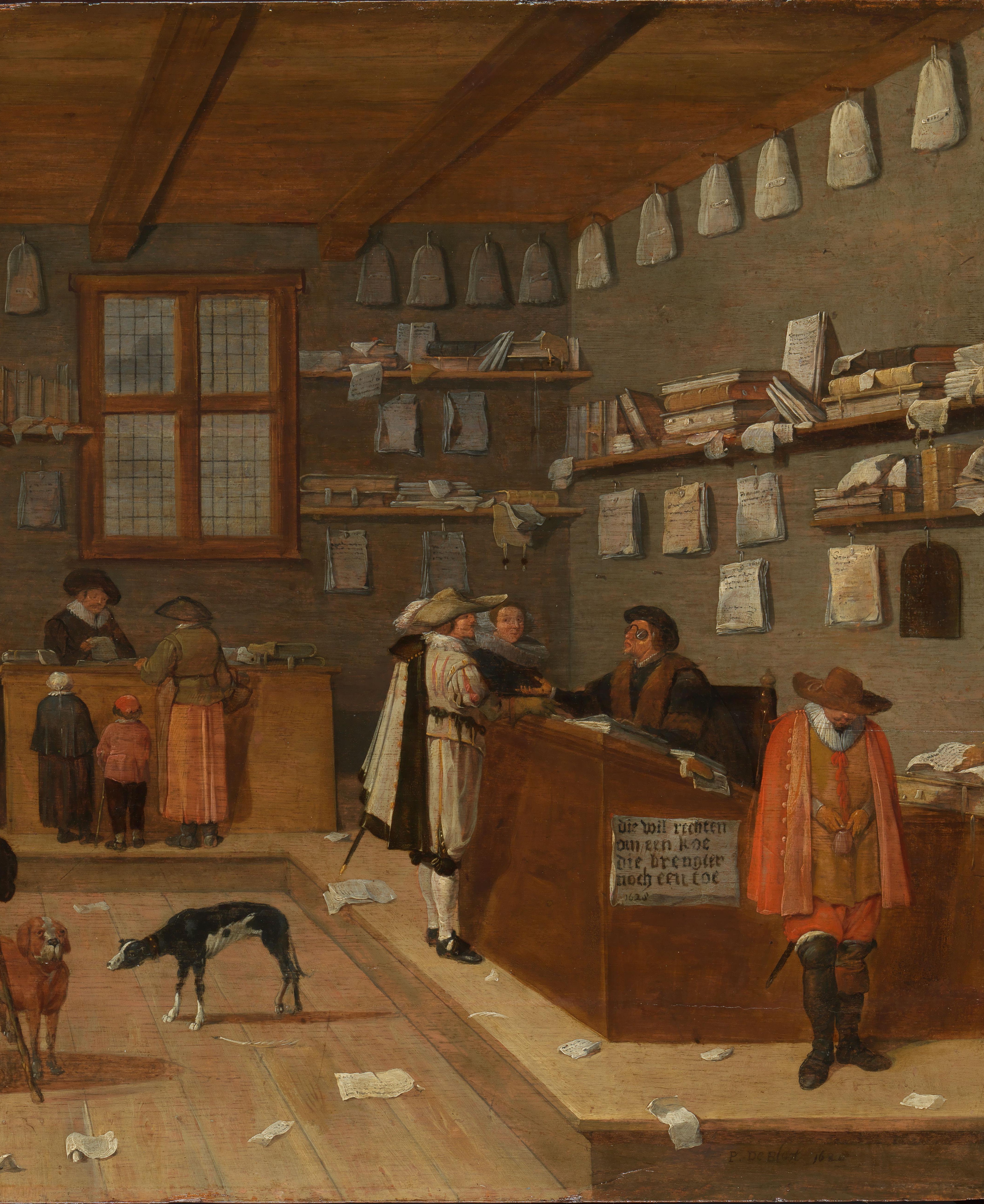
(source: ESCLH Blog)

CALL FOR PAPERS: Legal Use of Print in Early Modern Europe: Function, Materiality and Circulation (St Andrews: University of St Andrews, 15, 17-19 JUN 2027) [DEADLINE 1 DEC 2026]

(image source: St Andrews ) Proposals for papers (max. 20 minutes) are invited on the subject of ‘Legal Use of Print in Early Modern Europe:...